Custom CRM development
Your sales process, built into a CRM you control.
Most off-the-shelf CRMs assume a sales process, and your team either adopts it or works around it. We build the CRM around yours on Twentya, an open-source CRM you can host yourself: a data model that fits, workflows for the clerical work, and AI-drafted messages that a rep reviews before they go out.
3
custom objects
4
workflows
5–25
cold leads a week
How a lead moves
From cold lead to logged reply, in five steps.
This is the flow we built for a sales team that generates its own cold leads, 5 to 25 a weekb. The screens come from a demo workspace with dummy data, on stock Twentyc. The client’s own interface is our customized version of Twenty’s open-source frontend, and it isn’t shown here.
- 01
A lead arrives
A workflow brings each new lead into the CRM. It checks for a duplicate and enriches the lead before the record is saved.
Workflow
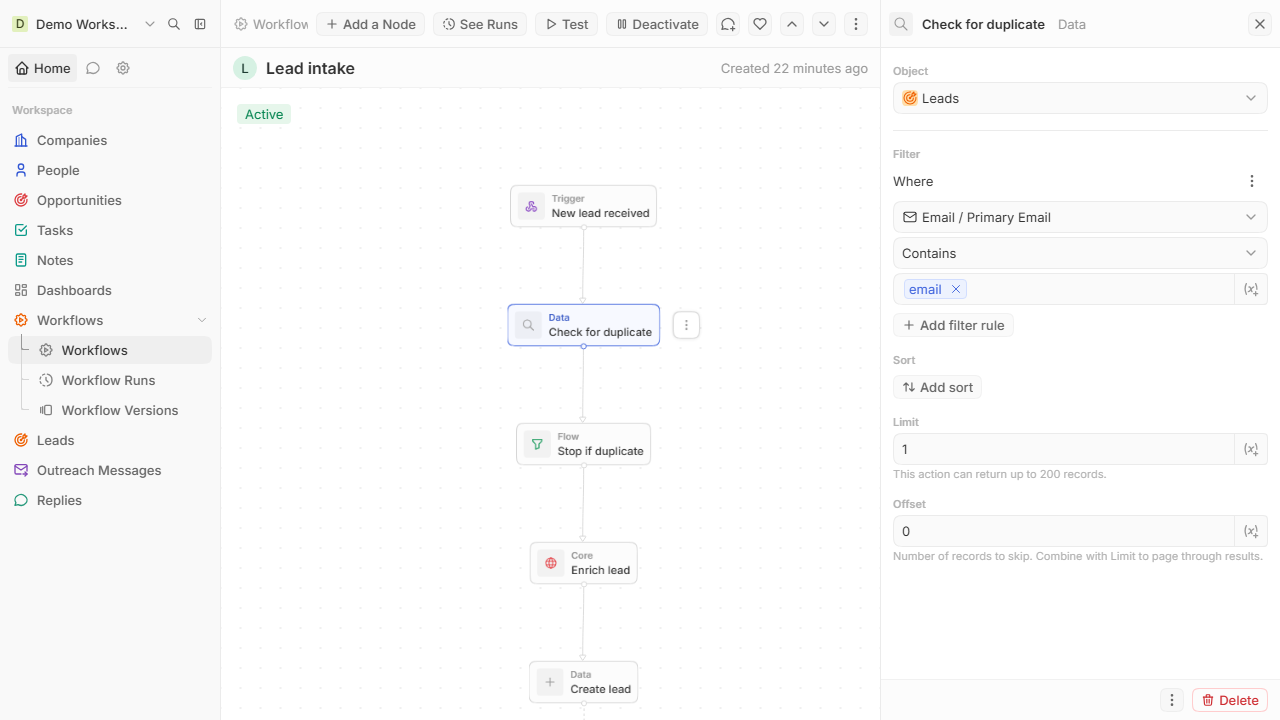
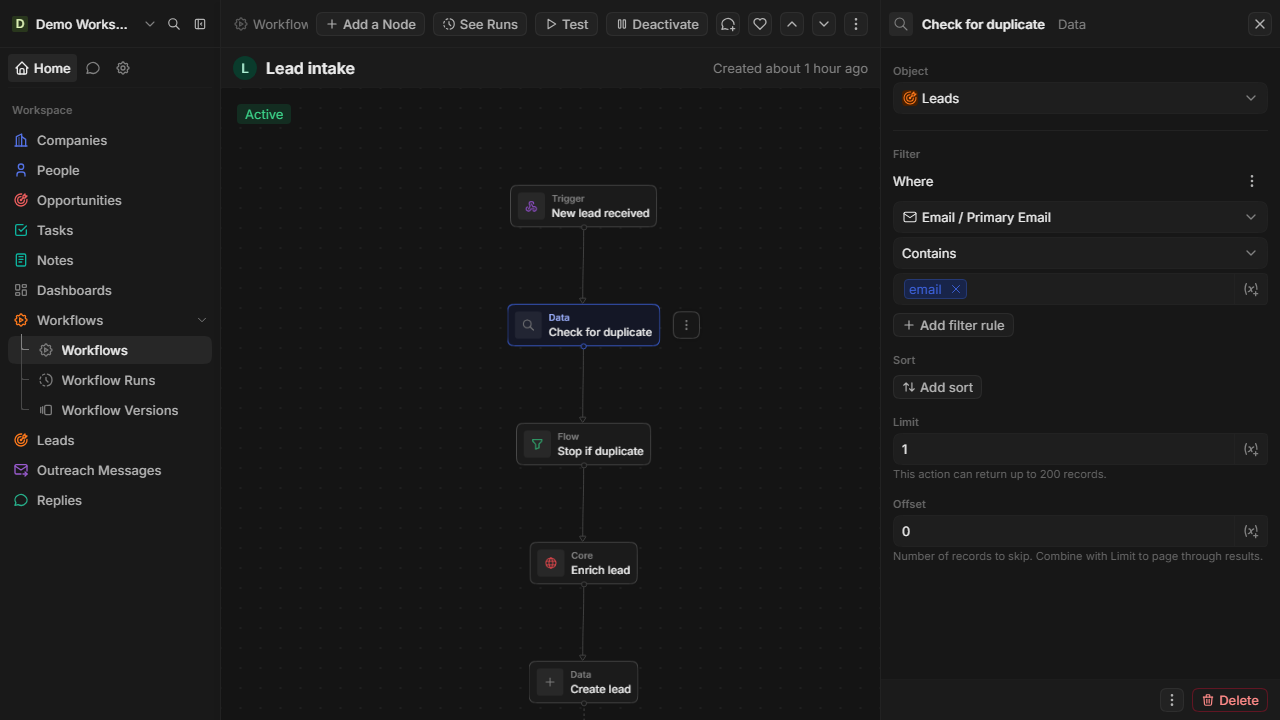
Fig. 1Lead intake: the workflow checks for a duplicate, enriches the lead and creates the record.Full size ↗Full size ↗ - 02
A manager triages it
A second workflow routes the lead to the sales manager, who triages it and assigns a sales rep by hand.
Workflow, then a person
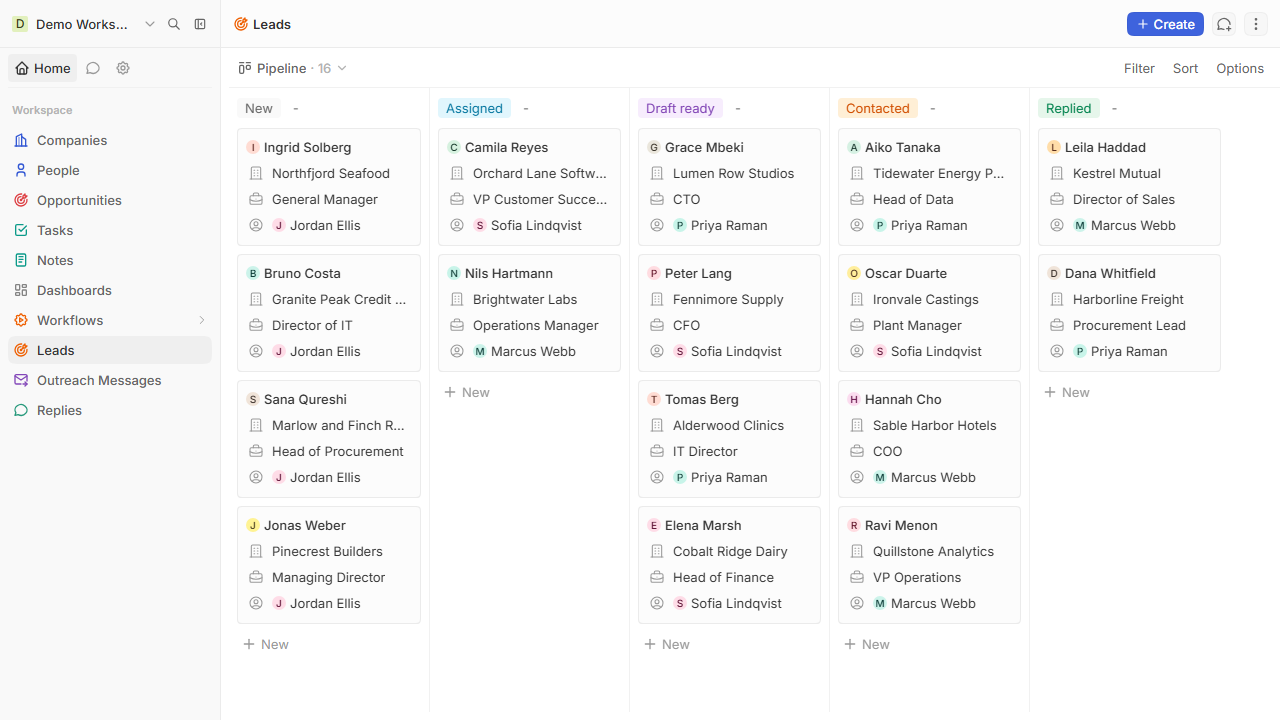
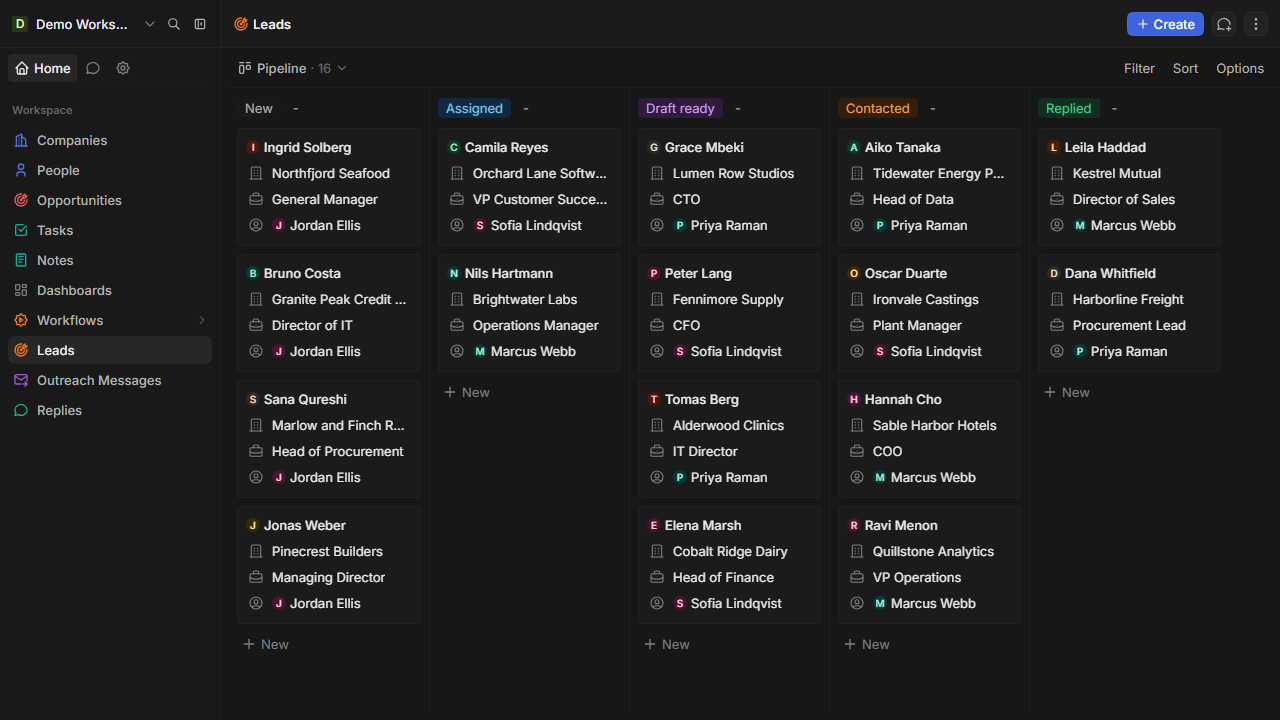
Fig. 2The pipeline board. New leads sit with the sales manager until a rep is assigned.Full size ↗Full size ↗ - 03
AI drafts the first message
Once a rep is assigned, a third workflow sends the lead’s details to a hosted LLM. The draft is saved with the lead, and the rep reviews it before it goes out.
Workflow, then a person
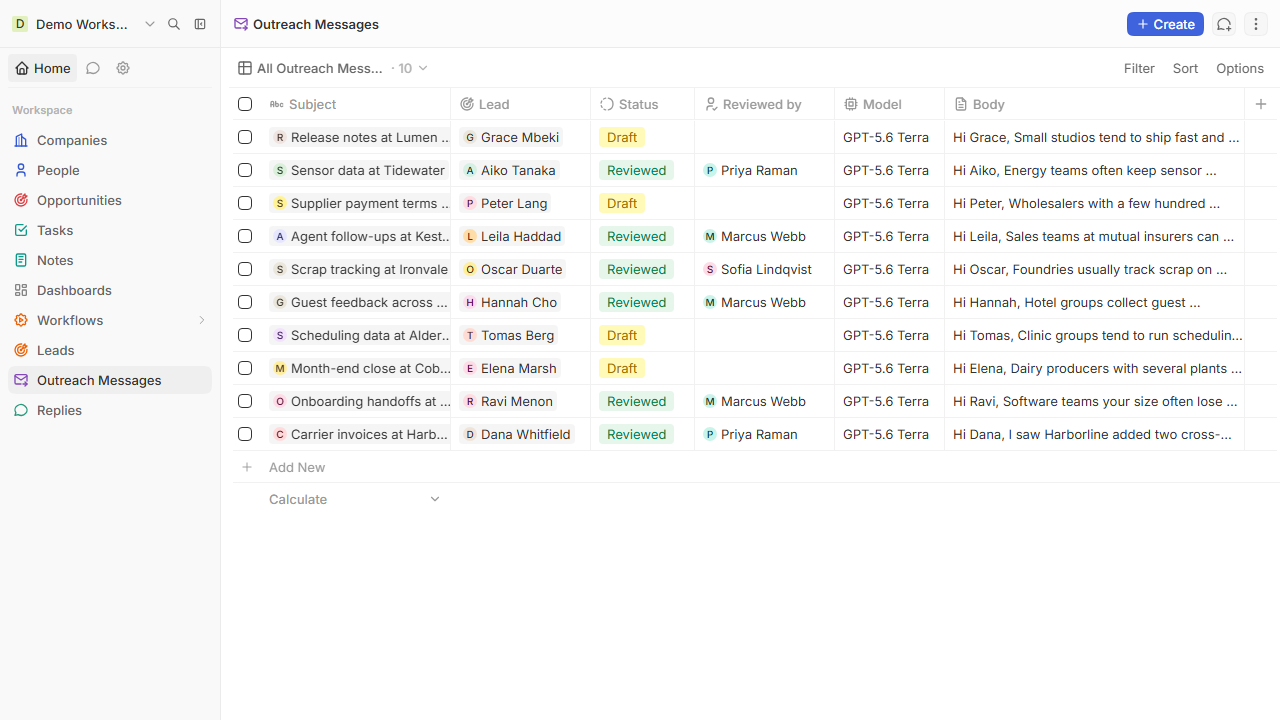
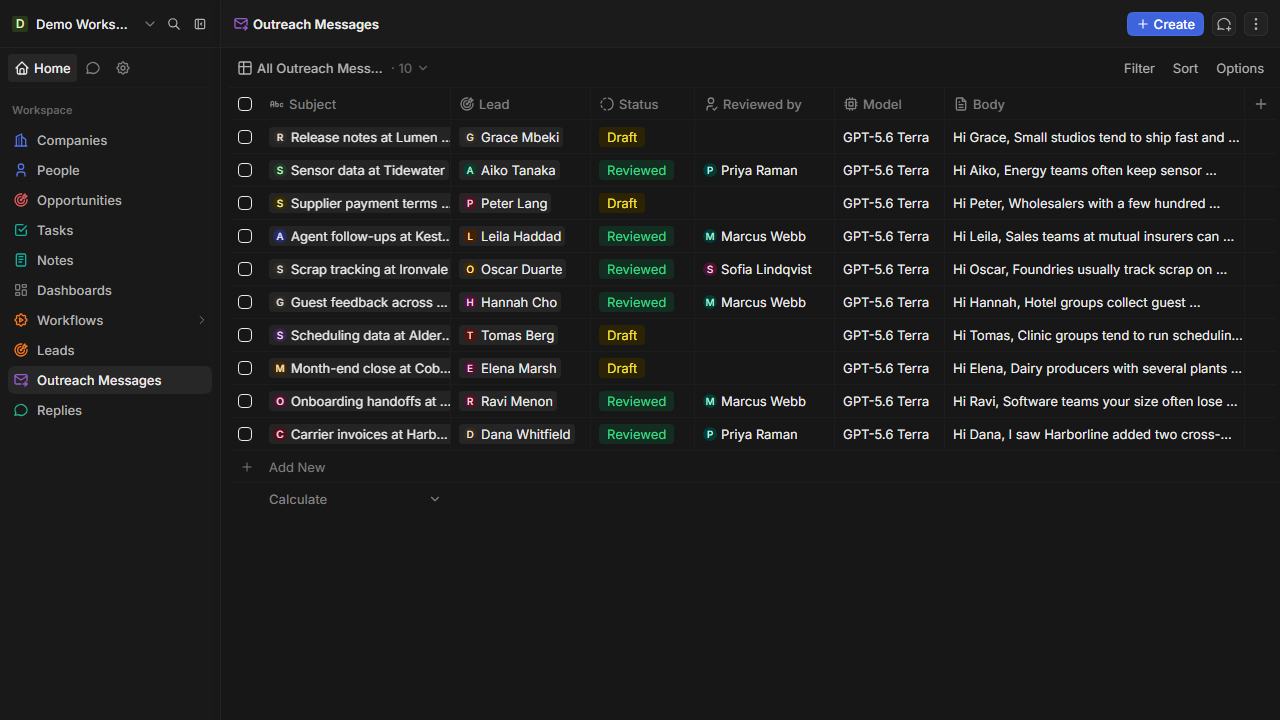
Fig. 3Drafts written by GPT-5.6 Terra, with each draft’s review status and the rep who reviewed it.Full size ↗Full size ↗ - 04
The reply is logged
When the lead replies by email, the reply is logged on the lead’s record and a workflow updates the lead’s status.
Workflow
- 05
The rep follows up
Reps work from pipeline views that show each lead’s stage, and get an email reminder to follow up.
A person
The workflows do the clerical work. A person decides who works each lead and what goes out.
What we build
Five parts, each built around the client’s sales process.
Data model
Custom objects for Lead, Outreach Message and Reply sit beside Twenty’s standard ones. Fields and relations tie each lead to its sales owner, its drafts and its replies.
Workflows
Intake, routing, drafting and reply handling, each a short sequence of steps in Twenty’s workflow builder.
Pipeline
Views by stage, plus a follow-up reminder emailed to each sales owner.
Review trail
Each draft is stored with its lead, the model that wrote it, its review status and the rep who reviewed it.
Frontend
Our own version of Twenty’s open-source frontend, customized for the client and deployed alongside the server.
Where it runs
The CRM runs on infrastructure you control.
In this build, the Twenty server, its database and our frontend build all run on the client’s own infrastructure instead of Twenty Cloud, and lead records are stored in a database the client hosts.
- On the client’s infrastructure
- The Twenty server, its database and our frontend build.
- Also calls out
- Outreach drafting, which sends a lead’s details to a hosted LLM API (GPT-5.6 Terra).
If lead details can’t go to a hosted model, the drafting step’s endpoint can be a model you host instead. See our sovereign AI work.
Why an AI team
Writing the draft is the easy part. The process around it is the work.
Our team’s background is AI in hospitals, where someone has to answer for the result. A sales CRM is a smaller version of that problem.
- Validation and audit-ready documentation, built for clinical reviewEvery draft is stored with its model, its review status and its reviewer.
- Federated training across 71 sites on six continents3Lead records stored on your own servers, as patient data stayed at each hospital.
- Reproducible pipelines with documented lineageWorkflows your team can read, with versions and a run history.
How we engage
Start with how your team sells.
The usual path is a short sprint, then a scoped build.
Discovery sprint
Two to four weeks. We map how your team sells, draft the data model and cost the build.
A costed plan you keep either way.
Build and handover
We build the data model, workflows and hosting, then document them and train your team.
A CRM your team can run without us.
Embedded advisory
Recurring senior engineering as your process changes: new fields, workflows and views.
A CRM that keeps up with how you sell.
A custom CRM is not always the right call. This build serves a team with 5 to 25 cold leads a weekb, each getting a personal message. If a standard SaaS CRM fits how you sell, we will say so on the first call.
Tell us how your team sells.
Start with a 30-minute call. If a custom CRM fits, the next step is a 2–4 week discovery sprint that ends in a costed plan you keep either way.
Sources & attribution
- 3. Pati, S. et al. “Federated learning enables big data for rare cancer boundary detection.” Nature Communications 13 (2022). doi:10.1038/s41467-022-33407-5; 71 sites across 6 continents, the largest real-world federated learning study to date.
- a. Twenty is an independent open-source CRM project, twenty.com.
- b. Vaiyu client engagement; the client is not named. Counts and lead volume describe that one system.
- c. Demo workspace with dummy data, built on stock Twenty. It does not show the client’s customized frontend.